
-
Past ETC Papers

Browse, search and view papers from the past AET Conferences.
-
Members' Area
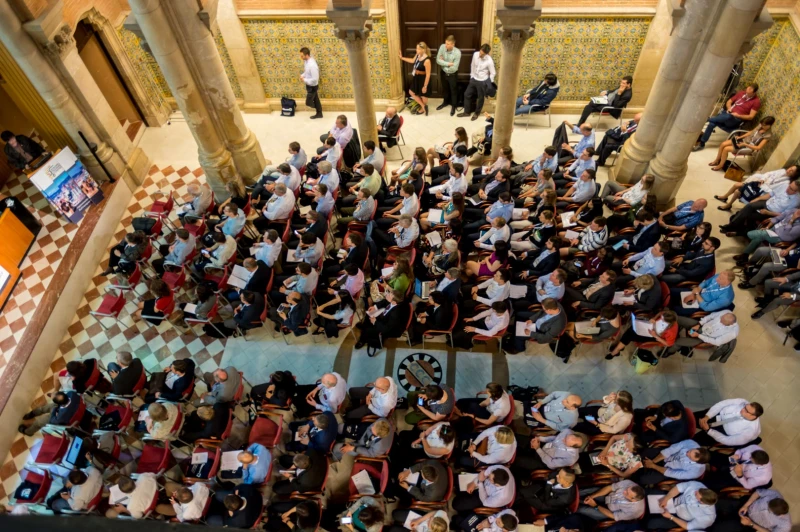
AET promotes networking and exchange of ideas, information and opportunities amongst members.
Travelling to Porto by train for ETC 2026
4 Dec 2025
By Sérgio Pedro Duarte and Manuel Margarido Tão

Plan your journey to Portugal’s vibrant coastal city
The preparation for the next European Transport Conference has started, and many are already preparing their trips even before submitting an abstract. As it was announced during ETC 2025, the next conference will take place in Porto, Portugal, 9 – 11 September 2026.
Porto is best known for Port wine but has so much more to offer. As a typical Portuguese city, you will find good weather (fingers crossed), great food and great hospitality. In fact, during the last decade Porto has won at least six tourism awards and has seen a great increase in city life all year long. With its six bridges and remaining parts of the 14th century city wall, the city is older than Portugal itself, mixing medieval and modern buildings with the Baroque, neoclassical and modernist architecture.
During the conference, there will be plenty of opportunities to visit iconic landmarks, toast with Port wine, see the sunset in the Atlantic Ocean and cross the Douro River to see the old city during the golden hour. You can get everywhere using the local sustainable options, using the public buses (STCP), the metro, or shared bicycle or e-scooters.
But first you need to get to Porto!
Getting to Porto by train
Porto’s airport (Francisco Sá Carneiro) was renewed in the early 2000s, having connections with major European cities. But if you are not into air travel, you can use buses or trains. It is an opportunity to cross the Iberian Peninsula.
While Portugal built the main railway lines in the 19th century, during the dictatorship of the 20th century the major roads were built, leaving trains forgotten. Still, you can travel by train to Porto and enjoy the beautiful landscape: the rocky mountains of Trás-os-Montes and Beira Alta, the greenery of Minho or the golden countryside of Alentejo. It all depends on your trip plan.
From Spain to Portugal
For delegates travelling from Spain, two options are available:
· Vigo–Valença (Minho Line) linking Porto and Galicia
· Badajoz–Elvas (Eastern Line) connecting western Spain to Entroncamento, on the Lisbon–Porto main line
Two trains operate daily in each direction on both routes. From Vigo, only the evening departure connects conveniently with trains from Madrid. Travellers via Badajoz can continue from Entroncamento by Intercity or Alfa Pendular services to Porto-Campanhã.
From the Rest of Europe
For those starting further afield, SNCF’s Intercités de Nuit between Paris-Austerlitz and Latour-de-Carol provides the remaining night train into the Iberian Peninsula. It connects with regional services to Barcelona and high-speed AVE links to Madrid for onward travel into Portugal.
Ticketing and Fares
International single tickets remain costly and inflexible. A more practical and economical option is the Interrail Pass, which covers most European networks and allows free outward and return journeys from the country of purchase. Travellers within Spain can also find discounted fares through renfe.com, ouigo.com/es, and iryo.com/es/home.
A Sustainable but Demanding Journey
For delegates with flexible schedules, rail remains a uniquely rewarding way to reach Porto. SNCF data show emissions as low as 3g CO₂ per passenger kilometre, compared with 260g by air - a compelling argument for modal shift. Yet Portugal’s limited international rail offer stands as a reminder that the EU’s sustainable mobility ambitions remain unevenly realised.
Planning Tools
The Austrian Railways ÖBB Fahrplan journey planner offers comprehensive international timetables, route maps and local transport links - an invaluable tool for anyone venturing to ETC 2026 by train.
Travelling in Portugal
Once you are in Portugal, you can use the urban train to visit historic cities only 1-h away such as Guimarães - Portugal’s first capital city, Braga - a town with roman roots, and Aveiro with its canals and fishing communities.
Latest news
Conference Supporters & Endorsers


